Looking for female dog names in German? A German name can give your dog a classic, distinctive identity without needing a German breed. Names such as Frieda, Greta, Heidi, Liesel, Klara, and Trudi are documented in German usage and work well as everyday dog names. Some names have clear meanings or long histories. Others are common German names that simply sound nice when called out at home, in a yard, or at the park.
The list below focuses on female names with a German connection rather than treating every name with a vaguely European sound as “German.” Meanings are included only where a reliable name reference supports them.
Quick Picks: Female German Dog Names
| Name | Idea | Style |
| Frieda | Peace | Classic |
| Greta | Short form of Margareta | Classic |
| Heidi | German diminutive of Adelheid | Sweet |
| Liesel | German diminutive of Elisabeth | Traditional |
| Klara | Form of Clara | Bright |
| Ida | Linked to a Germanic element meaning work | Short |
| Gerda | Feminine form of Gerd | Traditional |
| Helga | Traditional German feminine name | Strong |
| Hilde | German form related to Hilda | Strong |
| Lotte | Short form of Charlotte or Liselotte | Friendly |
| Trudi | Diminutive of Gertrude | Vintage |
| Marlene | Blend of Maria and Magdalene | Elegant |
| Berta | Form of Bertha | Traditional |
| Mathilde | German form of Matilda | Strong |
| Wilma | Short form of Wilhelmina | Short |
| Elsa | Traditional German-used name | Familiar |
| Ilse | German feminine name | Classic |
| Ingrid | German-used Scandinavian name | Refined |
| Brigitte | Traditional German-used name | Classic |
| Anneliese | German combination name | Traditional |
| Gisela | Traditional German feminine name | Elegant |
| Ursula | Traditional German-used name | Distinctive |
| Wanda | German-used feminine name | Vintage |
| Petra | German-used feminine name | Strong |
| Erika | German-used feminine name | Classic |
| Jutta | German feminine name | Distinctive |
| Marlies | German combination name | Soft |
| Fritzi | German diminutive | Playful |
| Friederike | German feminine form of Frederick | Formal |
| Hildegard | Germanic name with battle-related elements | Powerful |
Top Picks for Female Dogs
1. Frieda
Meaning/Idea: Frieda is a German form related to Frida, whose name element means “peace.”
Style: Classic, warm, feminine
Pronunciation: FRIH-dah
Frieda has a traditional German feel but is still short enough for everyday use. It is also not merely an old-fashioned name on paper: Behind the Name records Frieda as a German feminine name and lists it at No. 16 in Germany in 2025, making it one of the few names on this list with recent German name-ranking data.
Why choose it: It is easy to say, easy to hear, and has a clear two-syllable rhythm.
2. Greta
Meaning/Idea: Greta is a German short form of Margareta.
Style: Classic and polished
Pronunciation: GREH-tah
Greta is a compact choice with a distinctly European feel. Its documented German usage makes it a stronger choice than simply taking an English name and calling it German.
Why choose it: Greta is recognizable without sounding overly common as a dog name.
3. Heidi
Meaning/Idea: Heidi is a German diminutive of Adelheid.
Style: Sweet and traditional
Pronunciation: HY-dee
Heidi has a particularly strong German-language connection. The name is documented as German and became widely familiar in the English-speaking world through Johanna Spyri’s novel Heidi.
Why choose it: The two short syllables make it practical for daily calling.
4. Liesel
Meaning/Idea: Liesel is a German diminutive of Elisabeth.
Style: Vintage and distinctly German
Pronunciation: LEE-zuhl
Liesel gives you a traditional German name without the length of Elisabeth. It is specifically documented as a German feminine name.
Why choose it: It works especially well if you want something traditional but less familiar than Elsa or Heidi.
5. Klara
Meaning/Idea: Klara is a German form of Clara.
Style: Clean and classic
Pronunciation: KLAH-rah
Klara is used in German and several other European languages. Its German pronunciation is straightforward, making it practical for an English-speaking owner who wants a German spelling.
Why choose it: Klara sounds crisp when spoken and has a strong traditional feel.
6. Ida
Meaning/Idea: Ida comes from a Germanic element associated with “work” or “labor.”
Style: Short and classic
Pronunciation: EE-dah in German
Ida is particularly useful as a dog name because it is only two syllables and has a clean sound. Behind the Name traces it to the Germanic element id.
Why choose it: Its short length makes it convenient during training and everyday use.
7. Gerda
Meaning/Idea: Gerda is the feminine form of Gerd in German and Dutch usage.
Style: Traditional and sturdy
Pronunciation: GEHR-dah
Gerda has a distinctly old-fashioned German character. It is documented as a German feminine name rather than simply a name appearing on pet-name websites.
Why choose it: Pick Gerda if you want a traditional name that is less predictable than Greta or Heidi.
8. Hilde
Meaning/Idea: Hilde is a German variant of Hilda.
Style: Strong and vintage
Pronunciation: HIL-duh
Hilde has a short, firm sound and is documented in German usage. Its historical roots also connect it with the Germanic name family surrounding Hilda.
Why choose it: It has a strong sound without needing a long or complicated name.
9. Lotte
Meaning/Idea: Lotte is a German short form of Charlotte or Liselotte.
Style: Friendly and classic
Pronunciation: LOHT-tuh
Lotte is a useful choice when you want a German name that feels light rather than formal. Its documented German usage also distinguishes it from a random German-inspired invention.
Why choose it: Lotte is easy to call and naturally lends itself to a friendly nickname style.
10. Trudi
Meaning/Idea: Trudi is a diminutive of Gertrude and other Germanic names containing an element meaning “strength.”
Style: Playful and vintage
Pronunciation: TROO-dee
Trudi gives a traditional name a more casual pet-friendly form. Behind the Name specifically records it as German and connects it to Gertrude and Germanic naming elements.
Why choose it: It has personality while remaining simple to pronounce.
11. Mathilde
Meaning/Idea: German form of Matilda, from Germanic elements associated with strength and battle.
Style: Strong and elegant
Pronunciation: mah-TIL-duh
Mathilde is the German form listed for Matilda, whose Germanic roots are associated with “strength in battle.”
Why choose it: Mathilde suits owners who want a formal name with an easy nickname such as Tilda.
12. Marlene
Meaning/Idea: A blend of Maria and Magdalene.
Style: Elegant and distinctive
Pronunciation: mahr-LAY-nuh, approximately
Marlene is documented in German usage and was famously borne by German actress and singer Marlene Dietrich.
Why choose it: It sounds refined while still working as a recognizable dog name.
13. Wilma
Meaning/Idea: Short form of Wilhelmina.
Style: Short and vintage
Pronunciation: VIL-mah in German
Wilma is documented in German usage and is a short form of Wilhelmina.
Why choose it: Wilma is distinctive without being difficult for English speakers to say.
14. Berta
Meaning/Idea: German form of Bertha.
Style: Traditional and sturdy
Pronunciation: BEHR-tah
Berta is documented as a German-used feminine form of Bertha. The underlying name family comes from a Germanic element associated with brightness.
Why choose it: It gives a dog a traditional German name without being overly long.
15. Fritzi
Meaning/Idea: German diminutive of Friederike.
Style: Playful and compact
Pronunciation: FRIT-see
Fritzi is especially suitable if you like traditional German names but want something more casual for a pet. Behind the Name lists Fritzi as a German diminutive of Friederike.
Why choose it: The two syllables and sharp ending make Fritzi easy to call.
Traditional German Female Dog Names

A traditional name can be a better fit than a trendy-sounding option if you want your dog’s name to have a clear German connection. Several established German feminine names appear in German name references, including Frieda, Gerda, Hilde, Hildegard, Gisela, Friederike, Gerta, Gertrud, and Fritzi.
Here are more traditional choices:
- Anneliese — A traditional German combination name with a formal feel.
- Brigitte — Classic German-used feminine name.
- Elsa — Familiar, short, and traditional.
- Erika — A long-established feminine name used in German.
- Gisela — Traditional and elegant.
- Ilse — Short German feminine name.
- Ingrid — Refined and recognizable.
- Jutta — Distinctive traditional German choice.
- Petra — Short and sturdy.
- Ursula — Traditional and distinctive.
- Wanda — Vintage German-used choice.
- Friederike — Formal German feminine form of Frederick.
- Hildegard — Historic German name with Germanic roots.
- Gertrud — German form of Gertrude.
- Gerta — Short form of Gertrud.
Short and Easy German Dog Names
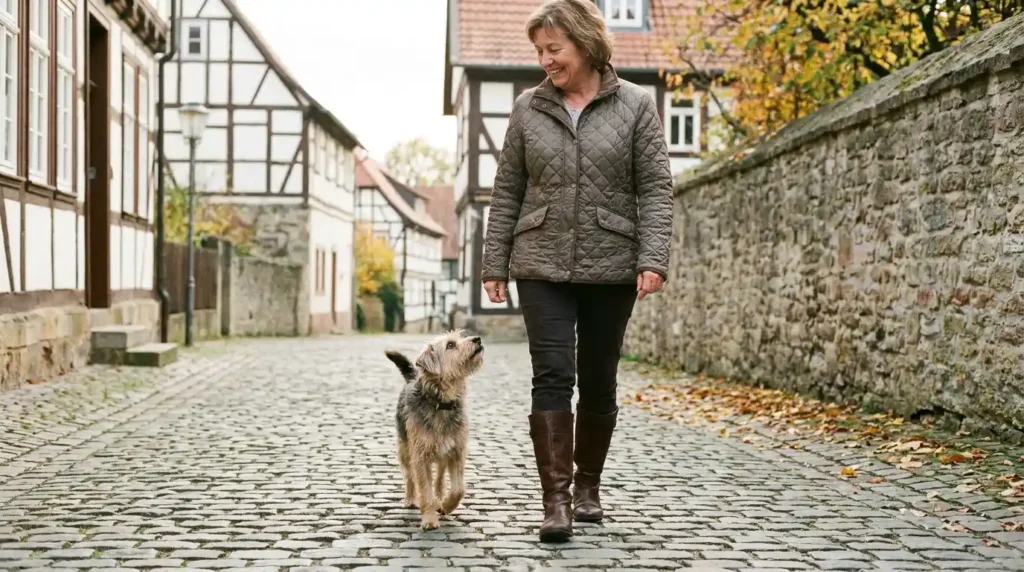
Short names can be convenient for everyday calling. That does not mean a short name is automatically easier for every dog, but names with one or two clear syllables can be practical when you need to get your dog’s attention.
Consider:
| Name | Approx. syllables | Style |
| Ida | 2 | Classic |
| Greta | 2 | Traditional |
| Heidi | 2 | Sweet |
| Hilde | 2 | Strong |
| Lotte | 2 | Friendly |
| Gerda | 2 | Vintage |
| Frieda | 2 | Warm |
| Wilma | 2 | Vintage |
| Elsa | 2 | Familiar |
| Ilse | 2 | Traditional |
| Klara | 2 | Classic |
| Trudi | 2 | Playful |
Names such as Ida, Heidi, Klara, Lotte, and Frieda also have clear documented German usage.
Strong German Names for Female Dogs
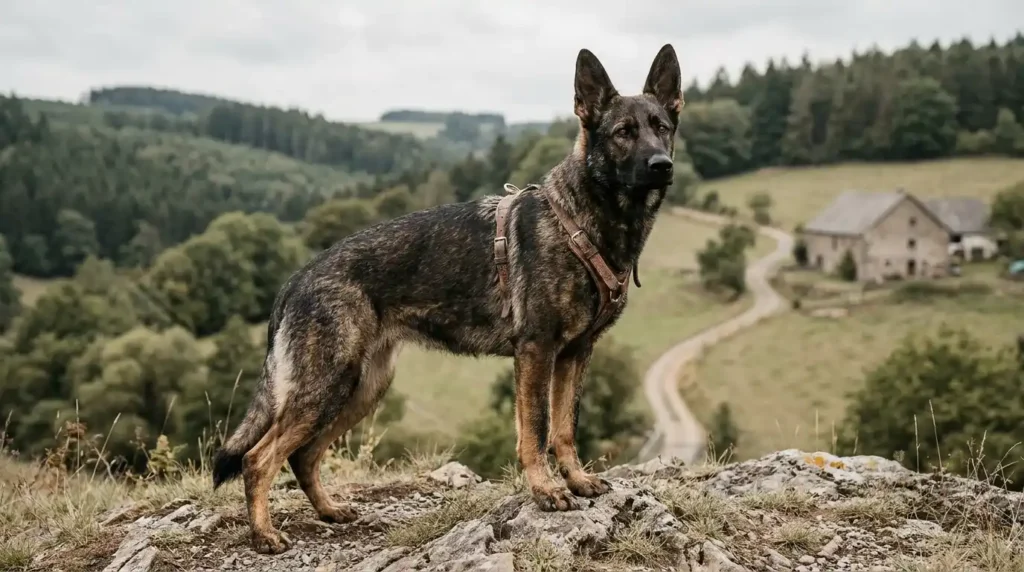
A German name does not have to sound delicate. Names connected with traditional Germanic elements can give you a stronger style.
Hilde, Trudi, Mathilde, Hildegard, and Gertrud are useful examples. Their name histories connect to Germanic elements associated with battle or strength, but that historical meaning should not be treated as a prediction of a dog’s personality.
For a strong but practical pet name, Hilde or Trudi is easier to use every day than a longer choice such as Hildegard.
50 Female Dog Names in German
Here is the complete reference list, with meanings or name-history notes included only where they are reasonably supportable.
- Adelheid — Traditional German feminine name; formal and historic.
- Anneliese — German combination name.
- Annelies — German-used form related to Anneliese.
- Berta — Form of Bertha.
- Brigitte — Traditional German-used feminine name.
- Elsa — Traditional German-used name.
- Erika — Established German feminine name.
- Frieda — German variant of Frida; associated with peace.
- Friederike — German feminine form of Frederick.
- Fritzi — German diminutive of Friederike.
- Gerda — Feminine form of Gerd.
- Gerta — Short form of Gertrud.
- Gisela — Traditional German feminine name.
- Greta — German short form of Margareta.
- Heidi — German diminutive of Adelheid.
- Helga — Traditional German feminine name.
- Hilde — German variant of Hilda.
- Hildegard — German name with Germanic roots.
- Ilse — German feminine name.
- Ingrid — German-used Scandinavian name.
- Ida — German-used name from a Germanic element associated with work.
- Jutta — Traditional German feminine name.
- Klara — German form of Clara.
- Liesel — German diminutive of Elisabeth.
- Liesl — German short form of Elisabeth.
- Lotte — German short form of Charlotte or Liselotte.
- Lotti — German diminutive of Charlotte or Liselotte.
- Marlene — German-used blend of Maria and Magdalene.
- Marlies — German combination of Maria and Lies.
- Mathilde — German form of Matilda.
- Petra — Established German-used feminine name.
- Trudi — German diminutive of Gertrude and related names.
- Ursula — Traditional German-used feminine name.
- Wanda — Traditional German-used feminine name.
- Wilhelmina — Traditional German feminine name.
- Wilma — Short form of Wilhelmina.
- Gertrud — German form of Gertrude.
- Gerti — German diminutive of Gertrud.
- Friedel — German diminutive used with names containing the fridu element.
- Friede — German form related to Frida.
- Marlis — German combination name related to Maria and Liese.
- Marliese — German combination of Maria and Liese.
- Hildegund — Rare German name with Germanic roots.
- Hiltrud — German name associated with Germanic elements for strength and battle.
- Gerlinde — German name formed from Germanic elements associated with spear and softness.
- Lieselotte — German variant of Liselotte.
- Liselotte — German-used combination of Lise and Charlotte.
- Luise — German form of Louise.
- Lore — German contracted form of Eleonore.
- Gerhild — German/Germanic name formed from elements associated with spear and battle.
How to Choose a German Name for Your Dog
Start with the name you can comfortably say several times in a row. A beautiful name that feels awkward to pronounce will become less appealing after weeks of daily use.
Think about sound first. Two-syllable names such as Frieda, Greta, Heidi, Klara, and Lotte are easy to call and distinguish.
Consider the dog’s appearance without forcing a personality. A pale-coated dog might inspire a light-sounding name, while a large dog may make a strong traditional name appealing. The association is your naming choice, not a statement about what the dog will be like.
Check the actual German connection. “German” can mean German-language usage, Germanic origin, or a name associated with German culture. Those are not identical. For example, Greta has documented German usage but is a short form of Margareta, while Heidi is specifically a German diminutive of Adelheid.
Say the name at normal volume. Try it indoors, outside, and from several feet away. A name that sounds clear in conversation may feel different when called across a park.
Avoid names that sound like commands. Before settling on a name, say it alongside common cues such as “sit,” “stay,” “down,” and “no.” A little distance between the name and training words can reduce confusion.
Think about the adult dog. A puppy may suit a cute name, but the same name should still feel natural when the dog is fully grown.
Frequently Asked Questions
What are some good female German dog names?
Frieda, Greta, Heidi, Liesel, Klara, Ida, Gerda, Hilde, Lotte, and Trudi are useful choices. They have documented German usage or German naming connections and are relatively practical for everyday calling.
What is a traditional German name for a female dog?
Frieda, Gerda, Hilde, Helga, Gisela, Anneliese, Hildegard, and Gertrud all have established German usage. The best choice depends on whether you prefer a short, vintage, formal, or stronger-sounding name.
Is Heidi a German name?
Yes. Heidi is documented as a German diminutive of Adelheid and is also used in several other languages.
Is Frieda a German name?
Yes. Frieda is documented as a German feminine name and is a variant of Frida, which comes from a Germanic element associated with peace.
What are short female German dog names?
Good short options include Ida, Greta, Heidi, Hilde, Lotte, Frieda, Gerda, Wilma, Elsa, Ilse, and Klara. Most have two syllables in German or are compact enough for everyday use.
Are German dog names only suitable for German breeds?
No. A German name can be chosen because you like the language, cultural connection, family heritage, or simply the sound. German breeds such as German Shepherds and Dachshunds are an obvious match, but the name itself does not require a German breed. The American Kennel Club’s German dog-name guide likewise notes that owners may choose German names for heritage or because they like how the names sound.
Conclusion
The strongest choice is usually the name that sounds natural when you say it every day. Start with a small group such as Frieda, Greta, Heidi, Klara, Liesel, or Lotte, then say each one aloud in different situations. Check the German meaning or name history before making your final choice, especially when cultural accuracy matters.

Callan Mercer is a U.S.-based animal name writer and content researcher. He combines creative naming ideas with research into personality, nature, culture, and popular trends. At NameClassifi, Callan creates useful naming guides designed to help readers discover memorable names that suit different pets and animals.